Thursday, February 26, 2015

Thank YOU and Farewell!!!

Hello All!

I firstly would like to thank all of you, my colleagues, for all of your advice and support throughout this entire process. This program for me has been a wonderful journey for me. Early childhood is dear to my heart, and this program has completely prepared me for my role and mission in this field. There is truly something special about this field. Being an educator is the most rewarding and challenging career one could choose. Through out this course, I have felt so supported by my professors and colleagues.
In this program, I have learned how to research, how to network, and how to implement my studies into my field. I learned that research is the foundation of academic, professional, and personal growth. I was given books on drive and determination. I was taught how to implement my readings into plans on how I would invoke change in my community and myself.
Networking is the framework of this program. In it, I learned the importance of building a support system, or a community of practice. To me it has become a place of comfort. I understand that this where fellow educators find their comfort, support, and advice. I,now, also understand the true importance of building professional relationships with community leaders, parents, and politicians.
This course has birthed a dream that I have had for a very long time, but I did not quite know how to format and plan it. A piece of this dream was realized through each course I took, and because of this I am going to be a business owner. This program gave me the courage to go for my dreams , and to not just see it when I'm asleep. I needed that push, ad this program has given me it and then some.

My long term goal is to create an environment of early childhood advocacy in my community. I want to build an organization whose entire purpose is to train parents how to advocate for their children, children how to advocate for themselves, and community leaders to advocate for the city.

In this program, I have learned about so many organizations and people here are just a few.....


My favorite quotes


To sum it up into words, see below at my wonderful Wordle...lol

Wordle: Untitled


SUPER THANK YOU!!!

To all of my professors that are responsible for most of my growth in this program. Thank you. You all have no idea how much of a difference you have made in my life. Thank does not seem like enough to explain the amount of gratitude I have towards you all. I only hope to inspire someone to do and be better as you have for me.


To my colleagues, WE MADE IT!!!!!!! Thank you all for your discussions, support, advice, and questions. All of which have helped me to fine tune who I wish to become now and in the future. I wish you all nothing but success,and I can't wait to meet you all at graduation in July!!!

I look forward to hearing wonderful things. Please leave your email as well.


Ashley Wilkins-Miller
Wilkinsa3@gmail.com

Saturday, February 14, 2015

Jobs/Roles in the ECE Community: Internationally


Hi Everyone!!!

Thanks for reading my post. This week we were asked to research international organizations that work towards positive changes in families and children. The following is a summary of what I found.

At least three international organizations or communities of practice that appealed to you and why you chose them

The first organization is;


The Amala Foundation unites people from all walks of life and inspires them to grow as individuals and as leaders in service to humanity.

“Amala” means many things in many languages. In Hindi, it means “pure”; in Arabic, “hope”; and in Hebrew, “work”. Amala offers safe, supportive and inspiring experiences where people from all backgrounds come together to learn and grow. From retreats to camps to leadership training, Amala’s programs promote personal growth, clear communication, deep listening, compassion and an ethos of service.

Most of Amala’s programs are focused on young people, including refugee and immigrant youth. Our youth come from many countries, ethnicities, religions, races, cultures and socioeconomic backgrounds. Some have grown up in refugee camps and are struggling to adjust to life in a new country, while others have been raised in middle and upper class families. Many have experienced war, abuse, neglect, extreme poverty, child labor, and gang violence. Yet no matter where we’re from or what hardships we’ve faced, we ultimately want the same things: love, acceptance, human connection and peace. Amala offers these young people a place to connect with a diverse community, build lasting friendships, and develop the skills needed to rise up as leaders in their communities.

Founded in 2001, Amala has grown to offer programs in 5 countries and 4 states, serving over 3,500 youth from 50 countries and creating meaningful volunteer opportunities for over 3,000 people.

Our programs are open to all youth, regardless of their ability to pay. We rely on the generous support of our community to ensure that no one is turned away who wishes to attend. About 80% of our participants receive some type of scholarship."


The second Organization that I researched was;


Terre des Hommes’ (TDH) mission is to work for the rights of the child and for equitable development, without racial, religious, political, cultural or gender-based discrimination. To this end, TDH supports and implements development and humanitarian aid projects designed to improve the living conditions of disadvantaged children, and of their families and communities. The Convention on the Rights of the Child is the conceptual framework guiding the activities of TDH.

At TDH, we believe that children are entitled to the rights set forth in the Convention on the Rights of the Child. It is the responsibility of the international community to make these rights a reality, and to create an enabling environment, through the implementation of economic, social and cultural rights.

At TDH, we believe that children are the main participants in their own development, having inherent rights and vital social, economic and cultural roles. TDH helps them realise their full potential in an ever-changing world.
(www.terredeshommes.org)


The third organization is;


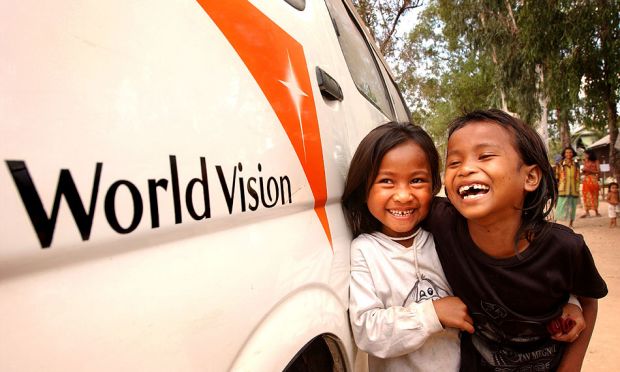
OUR VISION FOR EVERY CHILD, LIFE IN ALL ITS FULLNESS, OUR PRAYER FOR EVERY HEART, THE WILL TO MAKE IT SO.

OUR FUTURE

We look forward to a world where every child experiences Jesus’ promise of life in all its fullness.

Where they are protected, cared for and given the opportunities to become all God meant them to be.

Where they grow strong in communities free of need and full of promise.

Where families are valued, creation preserved and the most vulnerable live in security and confidence. Where they become responsible citizens of well-led nations.

Where peace and justice reign and all have the right to contribute.

Where they flourish in a world where the treasure of our hearts and the measure of our wealth is the happiness and well-being of all children. In such a world, we all taste the joy of the Kingdom of Heaven.
(http://www.wvi.org/vision-and-values-0)


These organizations stood out to me because of their relentless passion for advocating, and their love for children and their well-being (educationally, socially, and spiritually).

Job opportunities (currently available or not) that interest you

I would love to travel the world advocating for the importance of Early Childhood education. UNICEF had a job that I am very interested in


Education Specialist (Quality Education), P-4, Nairobi, Kenya

Vacancy No: E-VN-2015-000262
Duty Station: Nairobi
Country: Kenya
Region: ESARO
Job Level: P-4
Position#: 00043545
Application Close: 24-Feb-15
Contract Type: Long-term Staff (FT)

Purpose of the Position
Under the general supervision of the Regional Education Adviser, the incumbent is expected to provide solid technical assistance, quality assurance and knowledge building/management services to ESAR countries to support the improvement of education quality, including learning outcomes and equitable access to quality education in the region.

Key strategies for achieving this purpose are as follows:

a) Strengthening of evidence generation and evidence-based advocacy and by: enhancing the evidence base on education quality and factors affecting it, including statistical data (e.g. from Education Management Information System (EMIS) and Southern and Eastern Africa Consortium for Monitoring Educational Quality (SACMEQ))and research and evaluation evidence on issues affecting quality, ensuring that such data and documentation is readily available; also supporting the generation and dissemination of evidence on cost-effective approaches to education improvement (including Technology For Development (T4D) initiatives);

b) Development of regional and support for Country Office strategy/ies to promote minimum quality standards of education for all children in the region, building on past experience with Child-Friendly Schools (CFS), Schools for Africa (SFA) and other initiatives focussed on quality improvement,

c) Enhanced support for the development of national systems to enhance quality education, including: assessment, standards, quality assurance, school governance, teacher education and management, curriculum and school design in collaboration with external partners and institutions

d) Working closely with the other sectors and programmes that support quality improvement, including health, nutrition, and WASH, social and child protection, olicy to provide guidance to COs on strategic multi-sectoral approaches to enhancing education quality and with Basic education and gender equality (BEGE_ colleagues supporting Early Childhood Education and Development (ECED), Education in Emergency and Basic Education to ensure synergies and coherence.

e) Strengthening partnerships in the region focused on enhancing the quality of education, including acting as the ESARO Focal Point for quality education with the Global Partnership for Education and regional focal point for the Schools forFor Africa partnership, also strengthening resource mobilization for quality education initiatives.

It is critical that UNICEF ESARO continues to exercise a strong leadership and coordination role in these technical areas within the overall UNICEF Basic Education strategy and national education sector policies and strategies to achieve the Education for All targets and The Millennium Development Goals (MDGs) 2 and 3 in the region. The Regional Management Team requested additional support to enhance education quality in the region as a key priority.

Key Expected Results
1. To lead the development of regional analysis/es on education quality issues (including Bottleneck Analyses) and the development of strategies to address the quality of education in the region, with a focus on systemic national approaches (e.g. national assessment, national standards, national teacher education and management, school governance and EMIS) and the scaling up of innovations, including those Technology For Development initiatives (T4D) as Focal Point for BEGE.

2. To co-ordinate the multi-country School for Africa (SFA)initiative, ensuring timely submission of high-quality donor reports and updates from member countries and providing a regional analysis (consolidated) report on SFA, and any other programme status reports, whilst also developing other partnerships focussed on enhancing education quality, including support for COs engaged in the Global Partnership for Education and close collaboration with UNESCO and SACMEQ.

3. To provide guidance to all Country Offices on how UNICEF can support governments in enhancing education quality through undertaking country visits or providing electronic support on issues around the quality of education, including support to SFA initiatives and the identification of experts (in for example curriculum, QA, teacher education, management and governance) who can assist at the CO level.

4. To enhance knowledge management on quality education in the region through facilitating and/or promoting the analysis and documentation of good practices and lessons learned in the promotion of quality education; ensuring that such information is readily accessed through the internet, intranet and other channels.

5. Organise and facilitate or participate in meetings and workshops/seminars related to promoting quality education and support resource mobilisation efforts by partners, donors, and NatComs.

6. Contribute to the situation analysis, planning, and monitoring/review processes of BEGE in the region, including support for more rigorous analysis of analysis of interventions (including cost-effectiveness analysis) in collaboration with other BEGE colleagues and other programmes.

7. Support to regional office management processes and for other section duties, as agreed with the supervisor.

Qualifications of Successful Candidate
- Advanced university degree in one or more of the disciplines relevant to the following areas: Education; Primary Education, or Social Sciences fields relevant to international development assistance.

- Some demonstrative capacity to identify and monitor gender inequalities, as well as develop and implement gender mainstreaming in programmes.

- Eight years of relevant work experience at national and/or international levels in fields relevant to Education programmes.

- Experience working in the UN or other international development organization an asset.

- Background/familiarity with Emergency an asset.

- Fluency in English and another UN language. Knowledge of the local working language of the duty station would be an asset.

Competencies of Successful Candidate
- Communicates effectively to varied audiences, including during formal public speaking.
- Able to work effectively in a multi-cultural environment.
- Sets high standards for quality of work and consistently achieves project goals.
- Has good leadership and supervisory skills; co-ordinates group activities, ensuring that roles within the team are clear.
- Translates strategic direction into plans and objectives.
- Analyzes and integrates diverse and complex quantitative and qualitative data from a wide range of sources.
- Quickly builds rapport with individuals and groups; maintains an effective network of individuals across organizational departments.
- Identifies urgent and potentially difficult decisions and acts on them promptly; initiates and generates team- and department-wide activities.
- Demonstrates, applies and shares expert technical knowledge across the organization.


What skills and experience you would need to competently fulfill each of these roles


This position requires these skills and experience(s)


Qualifications of Successful Candidate
- Advanced university degree in one or more of the disciplines relevant to the following areas: Education; Primary Education, or Social Sciences fields relevant to international development assistance.

- Some demonstrative capacity to identify and monitor gender inequalities, as well as develop and implement gender mainstreaming in programmes.

- Eight years of relevant work experience at national and/or international levels in fields relevant to Education programmes.

- Experience working in the UN or other international development organization an asset.

- Background/familiarity with Emergency an asset.

- Fluency in English and another UN language. Knowledge of the local working language of the duty station would be an asset.


I have most of the experience needed except I do not speak another language or than English.


Ashley Wilkins-Miller


References

www.terredeshommes.org


http://www.wvi.org/vision-and-values


http://www.unicef.org/about/employ


Saturday, January 31, 2015

National and Federal Organizations of Interest

This week we were asked to list three national/federal CoP or organizations that appealed to me.

NAEYC


"NAEYC promotes high-quality early learning for all children, birth through age 8, by connecting practice, policy, and research. We advance a diverse, dynamic early childhood profession and support all who care for, educate, and work on behalf of young children."(http://www.naeyc.org/about/mission)


Zero to Three


"ZERO TO THREE is a national nonprofit organization that provides parents, professionals and policymakers the knowledge and the know-how to nurture early development.

Neuroscientists have documented that our earliest days, weeks and months of life are a period of unparalleled growth when trillions of brain cell connections are made. Research and clinical experience also demonstrate that health and development are directly influenced by the quality of care and experiences a child has with his parents and other adults.

That is why at ZERO TO THREE our mission is to ensure that all babies and toddlers have a strong start in life.

We know that as babies, the way we are held, talked to and cared for teaches us about who we are and how we are valued. This profoundly shapes who we will become.

Early experiences set a course for a lifelong process of discovery about ourselves and the world around us. Simply put, early experiences matter. We encourage you to learn more about very young children, early development and the work of ZERO TO THREE by exploring our site." (http://www.zerotothree.org/about-us/)


NAECTE


NAECTE is a national organization whose purpose is to;

"To promote the professonal growth of our membership
To discuss educational issues specific to our membership
To advocate for improvements in early childhood teacher education
Provide a forum for consideration of issues and concerns of interest to educators of early childhood teacher educators
Provide a communication network for early childhood teacher educators
Facilitate the interchange of information and ideas about research and practice
Use, as vehicles, the Journal of Early Childhood Teacher Education, conferences, resolutions, position papers, and other publications
Cooperate with other national and international organizations concerned with the study and education of young children" (http://www.naecte.org/)


These three organizations are very popular, but it does not take away from the incredible things that they have done in our field. NAECTE and NAEYC accreditation are seen highly in our field.


The Job opportunities that would interest me;

Early childhood Professor at an University. I would love to do this because I could educate our future EC educators.The skills that I would need in order to qualify for this position would be to get my Ph.D in Education, and to have experience in the field. In some cases I would only need my Master's Degree. I have the experience and I am completing my Master's. The only thing that I am missing is a Ph.D, and it is my goal to obtain that as well.


Ashley Wilkins-Miller


References

http://www.naecte.org/


http://www.zerotothree.org/about-us/


http://www.naeyc.org/about/mission

Thursday, January 15, 2015

Exploring Roles in the ECE Community: Local and State Levels


Hello Fellow Educators!!!


As educators, or "World Changes"( As I like to call us) we are constantly finding ways to invoke a positive change in our community. One way to do that is to join like minded organizations in our communities, state, and nation. Throughout my life I have consistently been involved in programs that push for better opportunities for the people in my community. Being raised in an area that is somewhat looked over educationally, I have made it my mission to change the course of our less than positive approach in education.

There are two organizations in my community that I serve on, and I am very proud of the strides that they have made in my community.


The South Carolina Education Association is
"The South Carolina Education Association (The SCEA) is the professional association for educators in South Carolina. Classroom teachers, guidance counselors, librarians, principals, superintendents as well as bus drivers, teaching assistants, lunch room operators, maintenance engineers, clerks and secretaries from Pre-K to 12th grade and Higher Education are members of The SCEA.
If you work in a public school in South Carolina, you belong in The SCEA.
The SCEA is the leading advocate for educational change in South Carolina. We provide our members with support and representation in the areas of employment conflict, political action, legislative initiatives, leadership growth and professional development.
Educators in South Carolina look to The SCEA for assistance in every aspect of their professional life. From career planning as a student to retirement assessment as a career teacher, The SCEA offers assistance, guidance, and inspiration." (https://www.thescea.org/aboutus/)

I adore this organization. I joined when I was an undergraduate at Winthrop University. This organization has linked me to some wonderful people that have helped me along the way. I enjoy the unity, support, and passion that we all have for education. I can ask for advice from them , and gain great wisdom about the issues that I may want to change in my community.


This organization is dear to my heart. This program provides support, education, job readiness, mentorship, and independent living skills to young men that are in the foster care system, and DJJ. The difference that they make in these young gentlemen is phenomenal.


I love this organization, and I desire to become involved in it. NAEYC is
"Vision Statement
All young children thrive and learn in a society dedicated to ensuring they reach their full potential.

Mission Statement
NAEYC promotes high-quality early learning for all children, birth through age 8, by connecting practice, policy, and research. We advance a diverse, dynamic early childhood profession and support all who care for, educate, and work on behalf of young children.

Values and Beliefs
Our core values are defined in the NAEYC Code of Ethical Conduct and are deeply rooted in the early childhood profession. In addition, we seek to be a high–performing, inclusive organization that is enriched by and continually grows from our commitment to diversity, as embodied by our core beliefs.

We uphold these values and beliefs in all our interactions and initiatives:

Core Values

Appreciate childhood as a unique and valuable stage of the human life cycle.
Base our work on knowledge of how children develop and learn.
Appreciate and support the bond between the child and family.
Recognize that children are best understood and supported in the context of family, culture, community, and society.
Respect the dignity, worth, and uniqueness of each individual (child, family member, and colleague).
Respect diversity in children, families, and colleagues.
Recognize that children and adults achieve their full potential in the context of relationships that are based on trust and respect.
Core Beliefs

Excellence and Innovation—We are imaginative risk takers willing to challenge assumptions while being accountable to our mission and fiscally responsible.
Transparency—We act with openness and clarity.
Reflection—We consider multiple sources of evidence and diverse perspectives to review past performance, note progress and successes, and engage in continuous quality improvement.
Equity and Opportunity—We advocate for policies, practices, and systems that promote full and inclusive participation. We confront biases that create barriers and limit the potential of children, families, and early childhood professionals.
Collaborative Relationships—We share leadership and responsibility in our work with others. We commit time and effort to ensure diverse participation and more effective outcomes. We act with integrity, respect, and trust." (http://www.naeyc.org/about/mission)


My goal is to become the owner of a premier early childhood program in my state. I want to create a change in early childhood education, parenting courses, and politics (concerning my field). In the future, I would like to teach early childhood college students, mentor them, and create a program that is catered to pruning educators to provide the best education to our children. I believe that the resources, network,education, and experience that I am gaining right now is preparing me to accomplish all of my goals.


Ashley Wilkins-Miller


References


http://www.naeyc.org/

https://www.thescea.org

Saturday, June 28, 2014

Gratitude and Farewell.... For now Wk8

As I prepare to move on into another course, I would like to take a minute to thank you all,my colleagues, for all of the support. We have came a long way, and for most of us we are almost at the finish line. I wish you the best in your fields and specializations of choice. Lets all remember what we learned from this course, and continue to make a difference in our communities. We made it!


Respectfully,

Ashley Wilkins-Miller

Sunday, June 15, 2014

Teamwork Makes the Dream Work......wk6


"This week you read about the five stages of team development: forming, storming, norming, performing, and adjourning. Consider the adjourning phase for several of the groups in which you have been involved. Think about which aspects of the groups made for the hardest good-bye. Are high-performing groups hardest to leave? Groups with the clearest established norms? Which of the groups that you participated in was hardest to leave? Why? What sorts of closing rituals have you experienced or wish you had experienced? How do you imagine that you will adjourn from the group of colleagues you have formed while working on your master's degree in this program? Why is adjourning an essential stage of teamwork?"


When I think about the groups that I was in that was hard to leave, I think about the key things that grew our bond. Most of which was because we built a personal tie to one another. We understood each other, and we respected one another. There was one group that I did not like, but we worked well together, and honestly I wanted a great grade. So, I sucked up my emotional feelings and pushed through. For the groups that I participated in and found it hard to leave we would usually do something to commemorate our time together. Whether we had dinner, a party, or some kind of outing. Working with an online community is a bit different. We have not met personally, and honestly for me I have to physically meet someone to form a tie with them. Adjourning is an essential part of teamwork, because it places a conclusion to the experience. It gives the team members closure on a chapter in their lives.


Sunday, June 8, 2014

Conflict Resolution Week 5

For Week 5, we discussed conflict resolution. We were asked

"Think about any disagreements, or conflicts, you have recently experienced or are currently experiencing at work with a supervisor or colleague, or someone in your personal life. Share at least two strategies you have learned about that might help you manage or resolve the conflict more productively, and why these strategies might be effective. For example, could you suggest a compromise? Could you look for a broader range of solutions to your disagreement? Could you use some of the principles of nonviolent communication or the 3 R's to better help you resolve this conflict?

Also, if appropriate, ask your colleagues for their input and advice regarding, if not specific problems, how they have learned to be more effective communicators as it relates to conflict resolution skills."


I would suggest that you take on a viewpoint of "how does this conflict affect the other person". When you do that, you will automatically have more understanding view point. I have also learned that each conflict is different, and must be treated as such. A compromise is not effective in a conflict that is about morals, or religious beliefs (in some cases. I have learned to not be so emotional when in the middle of a conflict, because it clouds judgement, creates impulsive descisions, and makes the person selfish. I could most likely use all of the skills learned this week, but the key is to know when to use certain ones.


Sunday, June 1, 2014

Communication Skills vs Perception WK4

Hello all. This week we were asked

"For your blog this week, think about the similarities and differences between how you evaluated yourself as a communicator and how others evaluated you. What is the one thing that surprised you the most? Why? What other insights about communication did you gain this week? Choose at least two to share with others through your blog and consider how each might inform your professional work and personal life."


My mother's perception of my comunication skills.'

" I believe that you have great communication skills. You are a great speaker, and you are attentive to others opinion. You do, at times talk over some people, but I do not believe that it is on purpose. You are a passionate person. I believe that it is purely excitement."


My teacher's perception of my communication skills.

" You have a way with words. You can get your point across without raising your voice. You care about others, and it shows when you speak with them."


My perception.....

I believe that I have some great communication skills, but I also have a lot to learn. As my mother stated, I do at times speak over people when i am extremely excited.


I have learned that true communication is a two way street. Listening is just as important, if not more, than speaking. I have learned that communication is not fully reliant on words, but on body language as well. Knowing this will prepare me for so many opportunities.

Sunday, May 25, 2014

Communicating Effectively......

This week we were asked to

"For your blog this week, complete the following activity:

Think about the cultural diversity you see in your colleagues at school, in your neighborhood, in your workplace, and also, possibly, within your family. Consider all the aspects that make up culture, including race, religion, political affiliation, sexual orientation, varying abilities, and so on.

Do you find yourself communicating differently with people from different groups and cultures?
If yes, in what ways do you communicate differently?
Based on what you have learned this week, share at least three strategies you could use to help you communicate more effectively with the people or groups you have identified."


My family is made up of different races, nationalities, and cultures. There is African American, Caucasian, Native American, Caribbean,and Hawaiian. My childhood was full of learning different cultures, recipes, and etc. Because of this I am open and welcoming to different cultures.
To answer these questions, I do not find myself communicating differently with people from different groups or cultures. I believe that one way that people could communicate more effectively is to treat others the way they would like to be treated.

Sunday, May 18, 2014

A world with and without Verbal Communication

This week we were told to :

"As you have been learning, communication is not always straightforward. Everyone, at some time or another, makes assumptions based on messages communicated through body language and facial expressions.


For this assignment, again consider what you have been learning about communication skills and styles. Then record an episode of a television show you do not normally watch. Watch the show with the sound turned off.

What do you think the characters' relationships are based on the ways in which they are communicating?
What are they feeling and expressing based on the nonverbal behavior you are observing?
Now, watch the show with the sound turned on.

What assumptions did you make about the characters and plot based on the ways in which you interpreted the communication you observed?
Would your assumptions have been more correct if you had been watching a show you know well?
Write about your experience in your blog, including what you learned about communication from this experience and insights or "aha" moments you believe would be helpful to your colleagues.

(Adapted from O'Hair & Wiemann, 2012, p. 154)


For this activity, I used Frasier. I have watched this shows for years, and it was interesting to see what I discovered. With the sound off I noticed that the father seemed more aggressive, but with the sound on it was undeniable Fraiser. The entire crew wears their heart on their sleeves. All of the characters' relationships are based on the ways in which they are communicating. Niles is completely in love with daphne, and he expressed this love non-verbally at first. I realized that most people do not communicate their true feelings, and that we have learned to "mask" them through false smiles.


Sunday, May 11, 2014

Competent Communication

Hello all, and thank you for reading my post!

This week, we were asked to

"What behaviors does this person exhibit that make him or her effective? Would you want to model some of your own communication behaviors after this person? Why or why not?:


I chose my mother for this activity. I chose her because she is a great listener and communicator. Often ask my mother how she could have a conversation with someone that is offending her without showing any emotion. It amazes me how she maintains her tone, and overall calm demeanor while this is happening. My mother works for the hospital, and she comes into contact with a lot of people ( patents and corporate) that can have horrible attitudes. She handles it with grace and intellect.

I model many of my behavior after my mother. Mainly because she is the first example of how a lady should conduct herself. I am still working on some of the communication skills that my mother has mastered. One of my flaws is my temper. I wear it on my face even when I do not say a word. When I feel offended, I usually go silent to not show anger. I take some time to myself, and then I come back to the conversation. Some would say that this is a great characteristic, but I would like to have complete control over my body language and my emotions when angry or hurt. I want to seem calm,cool, and collected like my mother. I guess that comes with maturity and growth.


Thanks for reading!
ADWM

Sunday, April 27, 2014

PROFESSIONAL HOPES AND GOALS

The hope that I have when I think about working with children and families who come from diverse backgrounds is that all of them are open to learning about all of their peers cultures. I believe that this will bring about a sense of community, and it will to open the minds of the children.
One goal I would like to set for the early childhood field related to issues of diversity, equity, and social justice is that one day this world will become a world that eliminates racism, and opens up to peaceful diversity, equality for all, and social justice.


I would like to thank all of you for your help, advice, support,resources,and expertise. I truly appreciate you all, and I wish you nothing but the best!


Ashley Wilkins-Miller

Sunday, April 20, 2014

WELCOMING FAMILIES FROM AROUND THE WORLD

This week we were asked to;

"You are working in an early childhood setting of your choice—a hospital, a child care center, a social service agency. You receive word that the child of a family who has recently emigrated from a country you know nothing about will join your group soon. You want to prepare yourself to welcome the child and her family. Luckily, you are enrolled in a course about diversity and have learned that in order to support families who have immigrated you need to know more than surface facts about their country of origin.

In order to complete this assignment, first choose a country you know nothing about as this family’s country of origin."


The country that I chose for my family's country of origin is ......


Dubai

I chose this place because I have always been interested in the culture,the beautiful city, and their technology.
"
Culture and People


Dubai's culture is firmly rooted in the Islamic traditions of Arabia. Islam is more than just a religion, it is a way of life that governs even the smallest of everyday events, from what to wear to what to eat and drink. Arabic culture in poetry, dancing, songs and traditional art is encouraged and weddings and celebrations are colorful occasions of feasting and music.

Hospitality
The most highly prized virtues of the Arab world are courtesy and hospitality. And they charm there guests the genuine warmth and friendliness. The serving of freshly ground Arabic coffee flavoured with cardamom is a sign of welcome. This is poured from the traditional long-spouted Arabic coffee pot into small cups with no handles. It is considered polite to accept one, two or three cups and then shake the cup gently from side to side to indicate you have had enough.

Family Life
The family is the most important institution in Arab society encompassing grandparents, uncles, aunts, cousins, etc as well as the immediate nuclear family unit. Relationships within these extended families are strong and respect is accorded to the elder members.

Marriages are arranged between families, although the bride and bridegroom naturally have to agree to the liaison. Wedding celebrations are major occasions lasting for several days. They involve feasting, music and dancing. Women are respected in Islamic society, taking their place at the heart of the family. Women also have equal educational opportunities and increasingly work outside the home.

Traditional Sports
The Traditional sport that is still practiced is the sport of falconry, a unique partnership between man and bird, and it is not unusual to see a hooded falcon being trained on its owner's gloved wrist.

The ancient sport of camel racing attracts a sizeable following and substantial purses for champions.

Throughout history, the Arab's have maintained great love of horses. This tradition lives on today in the rapid growth and development of horse racing in Dubai in recent years, including the establishment of the Dubai World Cup the world's richest horse race.

Theatre
There is only one permanent theatre company in Dubai. The Indian Playhouse, the Intercontinental Hotel, features performances by Burjor Patel Productions and hosts the travelling British Airways Playhouse, which makes frequent visits to Dubai.

Dance
There are a number of dance schools in Dubai like the renowned Ballet Center, behind, with ballet, jazz, tap and modern dance. In addition, belly-dancing and traditional dances are a mainstay in Arabic nightclubs, such as Al-Diwan, Metropolitan Palace Hotel and Escoba, Al-Khaleej Palace Hotel.

Music
The Dubai International Congress Center and The Crowne Plaza Hotel are the main venues that host visiting orchestras and musicians from around the world. Arabic nightclubs are the main venues for traditional Arabian music."


The five ways in which I will prepare myself to be culturally responsive towards this family is

Researching
- I would research "my" family and "our" people. "our" culture, belief systems, food, and traditions. Even if I may not have the same beliefs, I will know how to conduct myself respectfully.

Immersion

- I would totally immerse myself in their ways before I go there, so I will not feel the effects of culture shock.

Learn the language

- I would learn the most important words firstly, so that I could survive even when left alone.


Study the family History and I would research the educational culture as well, because education is my passion.


Hopefully, with these preparations I would be able to be successful and comfortable in my new environment, and hopefully it would create a closeness to my family.

Saturday, March 29, 2014

Practicing Awareness of Microaggressions


Don't Judge a book by its cover....


This week we were asked to research microaggressions. We were also asked to evaluate our personal biases as well.
One example of a microaggression which I detected this week was when a parent used a racial slur when an Egyptian couple came in to tour my school. The parent automatically assumed that they were "dangerous".
The parent soon found out that the family was not what she assumed. They were the complete opposite. The parent used stereotypes and ignorance to cloud her judgement. I felt so sorry and embarrassed and ashamed at her behavior. My first thought was that her children were witness to her behavior, and they would copy this is something was not changed immediately. Being raised in a multi-cultural family, I am not offended or frightened by other's differences. I understand that this is what makes us special. It was truly a teaching lesson for the parent and the children.

My perception of the parent changed dramatically. I never thought that she would be so closed minded. She always seemed so nice, and open to changed and multiple cultures. It only reminded me of the uphill battle that we as educators and individuals have to fight daily. It also reminded me that you never know what people most inner thoughts are. It was a reality check in its rawest form.


Be Peaceful, Love all, and Educate continuously,

Ashley Wilkins-Miller

Sunday, March 16, 2014

My Three Go to items...Week 2

For this week we were told to imagine
"A major catastrophe has almost completely devastated the infrastructure of your country. The emergency government has decided that the surviving citizens will be best served if they are evacuated to other countries willing to take refugees. You and your immediate family are among the survivors of this catastrophic event. However, you have absolutely no input into the final destination or in any other evacuation details. You are told that your host country’s culture is completely different from your own, and that you might have to stay there permanently. You are further told that, in addition to one change of clothes, you can only take 3 small items with you. You decide to take three items that you hold dear and that represent your family culture."

Woo, Intense right?


We were then asked to answer the following questions;


1.A description of the three items you would choose
I would take my hair gel ( I know shallow, but I have natural hair. I do not want to scare anyone LOL).
my carry on lock box
My phone

How you would explain to others what each of these items means to you

Hair gel- i do not want to scare anyone with my Dianna Ross huge hair.
Lock box- It holds family history documentation
Phone- communication,GPS,and research purposes

Your feelings if, upon arrival, you were told that you could only keep one personal item and have to give up the other two items you brought with you

I would choose my phone because I have my family tree(and documentation)saved on it, and I can look up videos on how to do my hair without gel. LOL

Any insights you gained about yourself, your family culture, diversity, and/or cultural differences in general, as a result of this exercise,

Family is very important in my culture, and I was raised that a lady carries herself with great grace and class( hence the hair gel choice).


Ashley Wilkins-Miller

Sunday, March 2, 2014

Equity.. Week 8

WOW, This course Flew by! For this week's blog assignment, We were asked to complete and answer these questions.

What insights have you gained about research from taking this course?

In this course, i have learned that research is far more detailed than statistics and pages of long words that make zero sense to the average reader. I have learned that research if used properly can change our communities, laws, cities, country, and even the world. I am grateful for this course because of this.

In what ways have your ideas about the nature of doing research changed?

Before this course, I wasn't completely sure how to conduct a formal research study. I would just type a paper and hope for the best. lol. But jokes aside, this course has prepared me and has given me the tools as to how to accurately conduct a study and how to validate it.


What lessons about planning, designing, and conducting research in early childhood did you learn?

Each week, we covered the steps of how we can complete each step of research... planning, designing, and conducting research. I also realized that face of curriculum and Early Childhood education has changed for the better because of the research that educators has conducted over the years.

What were some of the challenges you encountered—and in what ways did you meet them?

At the beginning of the course, I had a hard time focusing and understanding the course due to some serious issues that occurred with me family.


What are some of the ways your perceptions of an early childhood professional have been modified as a result of this course?

I realize that research is a vital part of our profession. Many times, It is the catalyst of change in our field.


See you all in the next course!

Sunday, January 26, 2014

Research that Benefits Children and Families—Uplifting Stories

Making the World thinner..... the skinny on Childhood obesity.


"Childhood obesity is a condition where excess body fat negatively affects a child's health or wellbeing. As methods to determine body fat directly are difficult, the diagnosis of obesity is often based on BMI. Due to the rising prevalence of obesity in children and its many adverse health effects it is being recognized as a serious public health concern."http://en.wikipedia.org/wiki/Childhood_obesity

As a previous WIC nutritionist for two years, I personally saw the effects of Early childhood obesity. My mothers over feed their infants and small children daily. This creates a serious issue in our country. These overweight children will become over weight adults if something does not change. This research is based on to cluster groups. One group will receive nutritional education ( nutrition plans, etc). The second group will continue to eat what they normally would eat.The subjects will be from the ages of 1 year old- 4 year old.

This research will educate children on a health lifestyle changes.

"Childhood obesity has more than doubled in children and tripled in adolescents in the past 30 years.1, 2
The percentage of children aged 6–11 years in the United States who were obese increased from 7% in 1980 to nearly 18% in 2010. Similarly, the percentage of adolescents aged 12–19 years who were obese increased from 5% to 18% over the same period.1, 2
In 2010, more than one third of children and adolescents were overweight or obese.1
Overweight is defined as having excess body weight for a particular height from fat, muscle, bone, water, or a combination of these factors.3 Obesity is defined as having excess body fat.4
Overweight and obesity are the result of “caloric imbalance”—too few calories expended for the amount of calories consumed—and are affected by various genetic, behavioral, and environmental factors.5,6"(CDC)

This research will also teach the families that risks of this. "Healthy lifestyle habits, including healthy eating and physical activity, can lower the risk of becoming obese and developing related diseases.6
The dietary and physical activity behaviors of children and adolescents are influenced by many sectors of society, including families, communities, schools, child care settings, medical care providers, faith-based institutions, government agencies, the media, and the food and beverage industries and entertainment industries.
Schools play a particularly critical role by establishing a safe and supportive environment with policies and practices that support healthy behaviors. Schools also provide opportunities for students to learn about and practice healthy eating and physical activity behaviors."(CDC)

With the education and the know how to do better, these children will have a brighter disease free, and healthy children.


Resources

http://www.cdc.gov/healthyyouth/obesity/facts.htm

Sunday, December 22, 2013

Final Blog assignment for EDUC6162-7

Hello all,

It has truly been a pleasure networking and learning more about all of you! I have had a great experience with you all
What I have learned about the international early childhood field for your professional and personal development is that all children face different adversities in each area of the world. It is our job to understand and respect our families. We live in a country with many privileges and many set backs. We as educators must learn how to cope with these issues and provide execllent education to our students.
My goal for the field related to international awareness of issues and trends and the spirit of collegial relations is to network with more educators from different countries, and growth from those experiences. I believe that it will make me not only a better educator, but a better person as well.
I will all of you nothing but success in your future endeavors!!! See you at the finish line....Class of 2014!!


Ashley Wilkins-Miller

Sunday, December 15, 2013

Blog Assignment: Getting to Know Your International Contacts—Part 3

This week, I skyped with my best friend Oyinda. She is a "head of Elementary" at Young Scholars of Egypt located in Cairo,Egypt. After some girl talk, we discussed here life as a teacher in Cairo.


What issues regarding quality and early childhood professionals are being discussed where you live and work?

"Most of the issues that I see are purely based on gender and religion. Many believe that girls do not deserve quality education because their role is within the home.Some men here are very closed minded and have a sexist approach to all things in their society. We are trying to overcome these things here. Our focus now is to try to change the minds of some, so that the girls here will have a good chance in life."

What opportunities and/or requirements for professional development exist?

" I was recently promoted to head of elementary about a year ago. I still educate young children, but I also maintain relationships with our families. It is vital that we as educators understand and respect the culture in this community".

What are some of your professional goals?

Eventually, I would like to return to my home of Lagos, Nigeria and open a school of my own."


What are some of your professional hopes, dreams, and challenges?

" My hopes lie in my return to Nigeria, and the ground breaking of my school. I dream of the day when I can look at my students and they tell me that i made a difference in their lives. I am constantly challenged by the men in this country. I've had men harass me, grab my butt, and say very racist things to me while here. Some of them have a very negative perception about women,especially those that came from America".


My friend has faced many challenges, but it is her love of education that drives her to continue. I am so proud of her.


Ashley Wilkins-MIller

Sunday, December 8, 2013

Sharing Web Resources

Follow some of the outside links that you have not yet explored. Where do they lead?

The website that I have been drawn to thew most is http://www.naeyc.org. They have a wealth of knowledge and advice about our field.
Their policies and beliefs echo the needs and requests of education throughout the nation.

" A Call for Excellence in Early Childhood Education

Early Years Are Learning Years

The demand for early childhood care and education programs continues to increase not only in response to the growing demand for out-of-home child care but also in recognition of the critical importance of educational experiences during the early years. Several decades of research clearly demonstrate that high-quality, developmentally appropriate early childhood programs produce short- and long-term positive effects on children's cognitive and social development.

NAEYC members, most of whom work directly with young children and families, see daily the toll of ill-conceived policies on the lives of the children and families we serve. Existing programs have too often taken fragmented, piecemeal approaches to the complex issues facing children and families. Effective policies have seldom been funded at sufficient levels to provide adequate support to all families who might benefit.

NAEYC believes that our nation is at a crossroads. We must develop an integrated system of early childhood care and education that includes comprehensive approaches that directly involve families and communities in program design, implementation, and evaluation. We can invest now in our children and families and enjoy long-term savings, with a more vibrant nation of healthy, achieving children and more stable families. Or, we can fail to make the investment and pay the price: increased delinquency, greater educational failures, lowered productivity, less economic competitiveness, and fewer adults prepared to be effective, loving parents to the next generation of children. Federal, state and local government, communities, parents, and the private sector must share in the responsibility of ensuring the well-being of children and families.

Our nation can and must do better to create opportunities that help all children and families succeed. The time for action is now.

------------------------------------------------------------------------------------------

A Renewed Call to Action

Our goal is not to simply defend the status quo. NAEYC’s convictions about early childhood care and education set forth a vision of a system that is still unmet.

That all young children deserve excellent early care and education
There are a large percentage of child care classrooms and family child care homes that are of mediocre or poor quality. An alarming number of infants and toddlers are found to be in unsafe settings. We know that children in schools with fewer resources, a larger percentage of teachers that are new or have emergency certificates, and lacking parental involvement in their education are not receiving the excellent early education they deserve.

That high quality early experiences make a difference in children’s lifelong academic and social success
Several decades of research clearly demonstrate that high-quality, developmentally appropriate early childhood programs produce short- and long-term positive effects on children's cognitive and social development. Specifically, children who experience high-quality, stable child care engage in more complex play, demonstrate more secure attachments to adults and other children, and score higher on measures of thinking ability and language development. High-quality child care can predict academic success, adjustment to school, and reduced behavioral problems for children in first grade. Studies demonstrate that children's success or failure during the first years of school often predicts the course of later schooling. A growing body of research indicates that more developmentally appropriate teaching in preschool and kindergarten predicts greater success in the early grades.

That these programs must be accessible to all families
Access to child care, particularly high quality child care, remains out of reach for many families. Programs outside of K-12 public education have the greatest difficulty in meeting the criteria of good quality, equitable compensation, and affordable access. Unlike K-12 education -- a publicly financed system with a relatively stable funding base -- most early childhood care and education services operate in a very price-sensitive market financed primarily by fees from families and supplemented by public and private contributions. Many families cannot pay the full cost of quality care, and the ongoing commitment from public and private contributions is seldom guaranteed. For other children, there are insufficient numbers of child care providers trained in or connected to others who can help support their special educational or other needs to develop to their full potential.

That early childhood professionals must have excellent preparation, ongoing professional development, and compensation commensurate with their qualifications and experience
A key component of quality programs is the quality of teacher. Recruitment and retention of child care staff is extremely difficult. The average child care teaching assistant earns roughly $10,500 a year and the highest paid child care teachers are paid roughly $18,000 a year. Turnover of staff averages 31 percent. In public schools, although salaries are much higher than for child care teachers, there is difficulty retaining talented teachers and recruiting more experienced teachers to troubled schools. Scholarships, financial aid, and loan forgiveness are insufficient to help many early childhood educators obtain excellent preparation and ongoing professional development.

That effective early education must be both challenging and appropriate to young children’s ages, individual needs, and culture
To guide their decisions about practice, all early childhood teachers need to understand the developmental changes that typically occur in the years from birth through age 8 and beyond, variations in development that may occur, and how best to support children's learning and development during these years. Children's development is best understood within the sociocultural context of the family, educational setting, community, and broader society. These various contexts are interrelated, and all have an impact on the developing child.

That everyone needs to work together to build a successful future for our youngest children
An equitable and sufficient system of financing early childhood education in the United States is still elusive. Child care is financed through a patchwork of government, parent, and private sector resources. Families contribute roughly 60 percent of the costs of child care; federal, state, and local governments combined contribute 39 percent, and business contributes one percent. Public schools are financed largely through property taxes, which has created an inequitable distribution of resources within school districts and states, despite additional resources from states and the federal government. An equitable system of financing child care and early education requires a strong partnership between government, families, and the private sector.

------------------------------------------------------------------------------------------


A Vision for Excellence

All states must develop a system of early childhood care and education with appropriate regulatory, governance, finance, and accountability mechanisms so that --

All Children have access to a safe and accessible, high quality early childhood education that includes a developmentally appropriate curriculum, knowledgeable and well-trained program staff and educators, comprehensive services that support their health, nutrition, and social well-being, in an environment that respects and supports diversity.
All Early Childhood Professionals are supported as professionals with a career ladder, ongoing professional development opportunities, and compensation that will attract and retain high quality educators.
All Families have access to early care and education programs that are affordable and of high quality, and are participants in the education and well being of their children through family involvement in programs and schools, as well as opportunities to increase their educational attainment.
All Communities are accountable for the quality of early childhood programs provided to all children, backed by the local, state, and federal funding needed to deliver quality programs and services.
To achieve these goals at the national, state, and local levels, policies and decisions must be guided of principles of Excellence, Access, Equity, Diversity, and Accountability.

Excellence: The design, funding, and implementation of systems necessary to support best practices in all early childhood programs.
Access: The absence of barriers for all children to attend high-quality programs.
Equity: Opportunities for all children, regardless of family status, income, disability, gender, national origin, ethnicity, religion, or race to attend high quality programs, with an emphasis on targeting funding to ensure that those families with the fewest resources are served.
Diversity: Flexibility in the ways in which programs are provided and services are tailored to the needs of families and children. Responsive and supportive programs that recognize and respect the whole child and family, their cultural backgrounds, and the community’s culture.
Accountability: Clearly defined standards for program quality and personnel, with input from the early childhood professionals, families, and communities, with ongoing planning and evaluation processes, to ensure positive educational, health, and social outcomes for children.
------------------------------------------------------------------------------------------

Making the Vision a Reality

Early childhood programs have the potential for producing positive and lasting effects on children, but this potential will not be achieved unless more attention is paid to ensuring that all programs meet the highest standards of quality. As the number and type of early childhood programs increase, the need increases for a shared vision and agreed-upon standards of professional practice.

Making this vision of excellence a reality will require a commitment from and a partnership among the federal, state, and local governments, business and labor, private institutions, and the public. As we stand at the beginning of a new millenium, we must join forces to advocate and implement the policies at the appropriate federal, state, and local levels that will lead to excellence in early childhood education programs."


Thoroughly search one area of the site. What do you find?

I found that there are many resources available for educators and families. The newsletters are informative and they can be used for continued education for educators.


Ashley Wilkins-Miller